Titles, everywhere
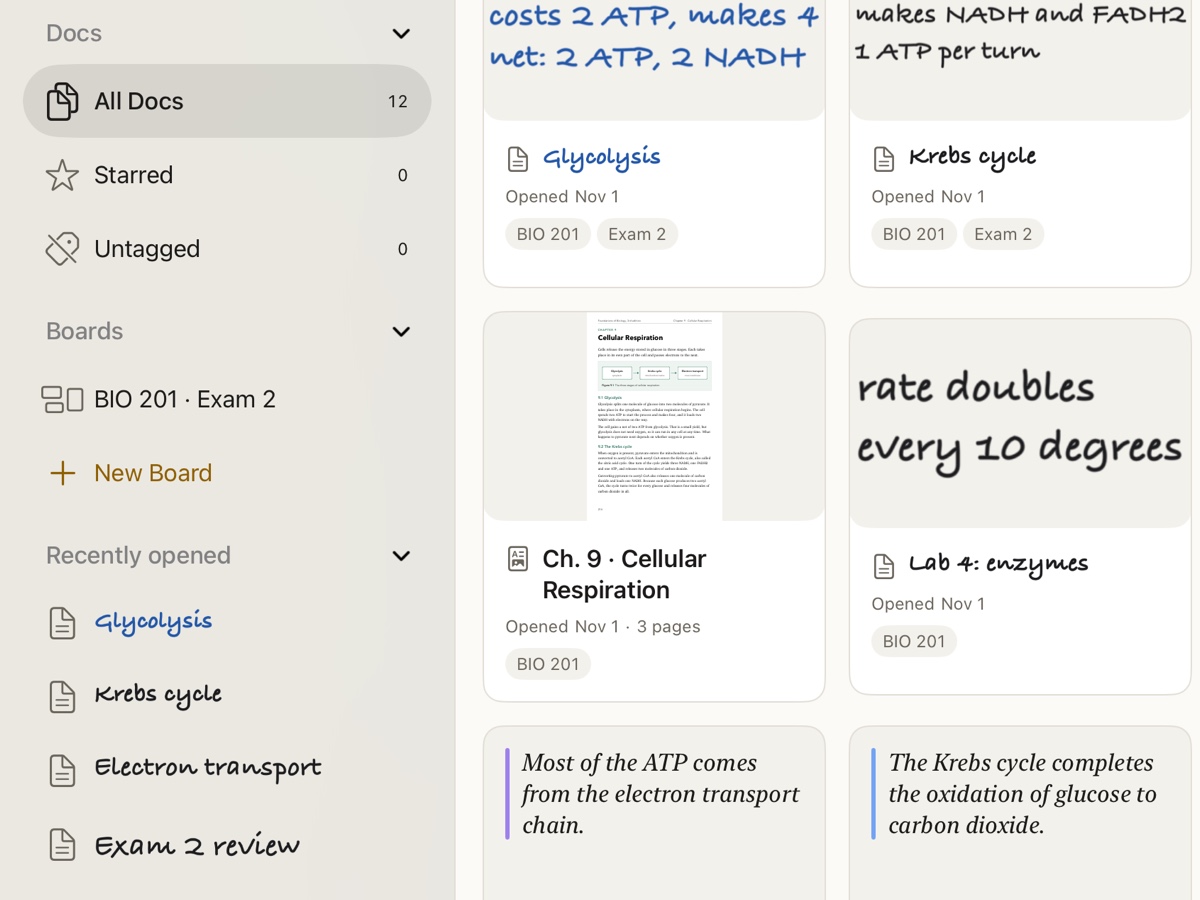
A doc named by hand keeps that name in lists, search, links and on cards.
For iPad, iPhone and Mac · Free, for good
Your handwriting stays handwriting. Every highlight keeps an exact link back to its passage. Every note shows what it links to, what links to it, and why.

Most note apps give you pages to fill. GraphNotes keeps track of how your thinking connects: which passage a note came from, which notes cite a page, and why two ideas belong together.
Write
Put the Pencil down and write. There is nothing to tap first, no block to make, no mode to switch on. GraphNotes keeps your strokes as ink, everywhere they go.
Every card has open paper below its last line. Start writing there and the ink becomes a new handwriting block in place. It grows as you write, and the card grows with it.
A new doc opens on its title, ready for the Pencil. Write the name and it stays in your hand everywhere the doc is named: the sidebar, the Docs browser, cards, search results, links and the Connections panel all show the title you wrote. Below the title, the page is open paper, all the way down.
GraphNotes reads your handwriting on your device so it can find it. It never swaps your ink for its guess. You get typed text only when you ask for it.
A doc named by hand keeps that name in lists, search, links and on cards.

Write on a resting card. No editor, no mode.

Each highlight’s notes sit beside its passage, handwritten or typed.

Quick questions in your own hand, anywhere on a board.
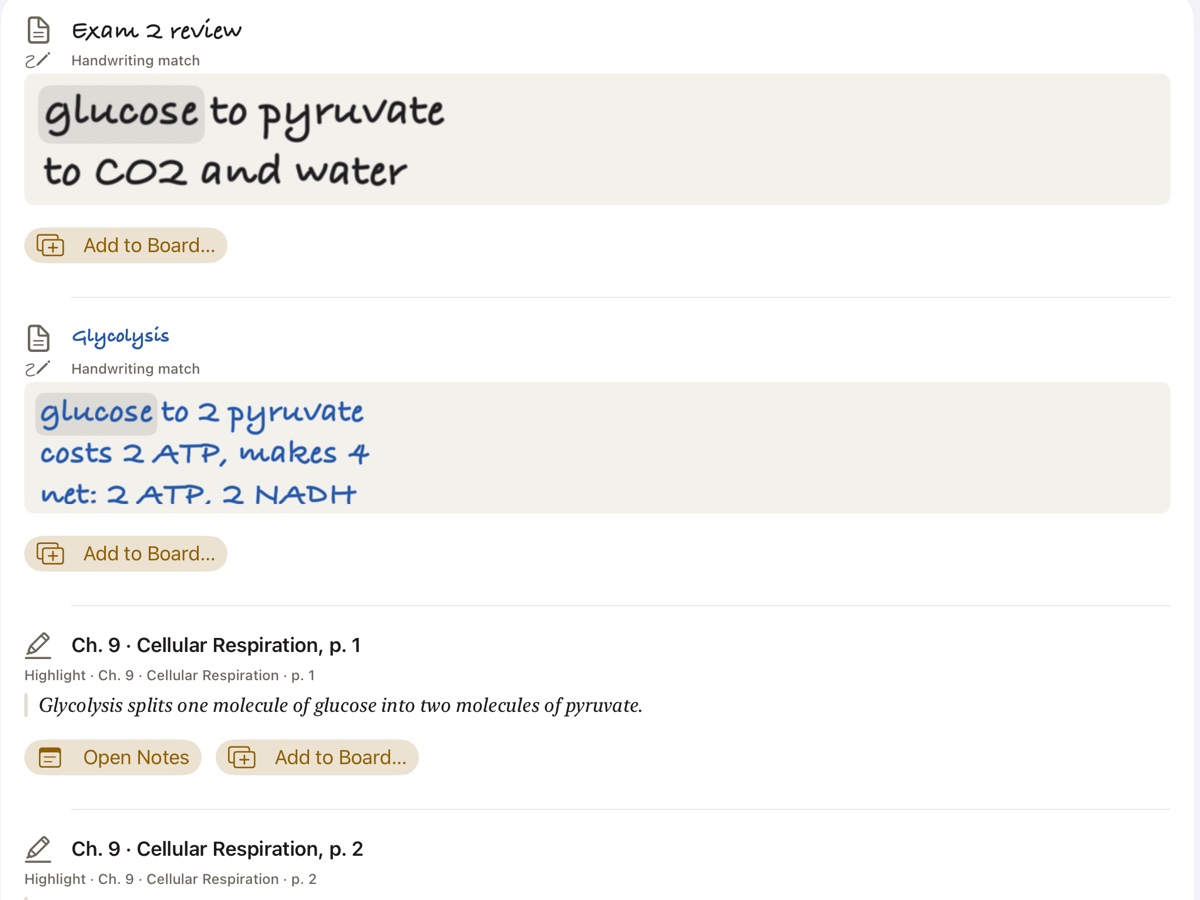
Search shows your strokes, with the match marked.

When you cite handwriting, the citation keeps the original strokes.
Connect
Highlight a passage and it becomes a note of its own, with an exact link to its page and words. Quote it, cite it or connect it, and the trail runs both ways.
Connect any two things on a board: cards, sticky notes, or the notes in two PDFs’ margins, drawn straight from note to note. Then tap the line to give it a reason and a label. Supports, Contradicts, Cites, Derived From, Written While: the reason travels with the link, so every note that cites a passage shows what it was for.
The Connections panel lists everything a doc, highlight or board links to and is linked from, grouped by reason. Your handwritten notes appear there as ink.

Pin the sources you are writing from, then quote or attach them to a block. GraphNotes records which block cites what, and keeps the words you quoted with the citation, so a later change to the source never rewrites what you cited.

Rediscover
Search reads what you wrote by hand on your device and shows it back to you as handwriting, with the matching words marked. Typed notes, titles and highlighted passages come up beside it.

Claude on your Mac
Connect Claude from GraphNotes for Mac, and it can search your library, read your docs, highlights and PDFs, and follow your links back to their passages. It can propose new links, notes and highlights too, and each one waits for you.
Needs GraphNotes for Mac and Claude Desktop on the same Mac: turn on Settings › Assistant › Assistant Access, then choose Add to Claude Desktop… in Settings › Claude. Claude is an assistant made by Anthropic. The Privacy Policy says what Claude can read.
iPhone Duo
On iPhone Duo, GraphNotes follows the fold. Prop it open like a laptop and the paper stands on the top half while your notes lie flat below, where Apple Pencil (USB-C) writes. Open it all the way and your boards are there in full.
Folded partway, the crease becomes the line between the PDF and its notes. Scroll the pages and the notes for the passages in view follow underneath. Choose a passage and its note comes to the top, ready for the Pencil.


One library for PDFs, handwriting, typed notes and boards, shaped by how you work.
Spread a paper across the board with its highlights beside their passages. Write in the margin, pull the passages that matter into your notes, and draft a review where every claim knows its source.
Keep the textbook chapter on the board with your handwritten notes beside it. Link each note to the passage it explains, then search your handwriting the night before the exam.

Put the deposition beside the contract. Highlight the testimony, write your note in the margin, and connect it to your note on the clause it contradicts. Your timeline and draft brief cite the exact page and line.

The case shown is fictional.
As someone with ADHD and autism, I made GraphNotes for myself first: to fill a gap no other app could, and to finally have tools that work the way my brain does.
GraphNotes is free, and it stays that way. No feature waits behind a payment, and nothing in the app pulls against the people using it.
Details are in the Privacy Policy.
Not quite. You write and type pages as in a notebook, but your handwriting, typed notes, PDF highlights and boards share one library. Everything has its own link, and every note shows what it links to and what links to it.
Only when you ask. Your device reads your handwriting so Search can find it, but GraphNotes always shows your ink. Copy as Text and Use as Text give you typed text on request.
For handwriting, yes: any Apple Pencil that works with your iPad, or Apple Pencil (USB-C) on iPhone Duo. Other iPhones show your handwriting but cannot take new handwriting. Only the Pencil draws, so your fingers scroll, select and move things without leaving marks. You can type everything without one. If you write with your left hand, the margin and its notes can sit on the left.
No. GraphNotes uses Margin view instead: you highlight a passage and write your notes on it, by hand or typed, and they sit beside the passage. Your PDF file is never changed. Export with Highlights makes a copy that has your highlights and notes in it.
Yes. Search finds words in handwritten notes, titles and sticky notes and shows your handwriting with the words marked. It also searches typed notes and the passages you have highlighted. Inside an open PDF, use Find.
On your iPad, iPhone or Mac and, when you are signed in to iCloud, in your own private iCloud. PDFs go in a GraphNotes folder in iCloud Drive. There is no GraphNotes account and no GraphNotes server. The app has no analytics, ads or tracking. The Privacy Policy has the details.
Only if you ask, for one thing: on a device with Apple Intelligence, Reflect on Connection can draft a short note on how two notes might relate. It runs on the device, is labelled “Generated by Apple Intelligence” and saves nothing. Suggested connections come from matching done on your device, and nothing is linked until you choose Keep.
Yes, from GraphNotes for Mac, once you turn it on. With Assistant Access on and Claude Desktop connected, Claude can search and read your library and propose links, notes and highlights, which change nothing until you choose Keep. Handwriting reaches Claude as the words GraphNotes recognized. What Claude reads goes to Anthropic with your conversation, and none of it to GraphNotes’ developer.
Nothing. GraphNotes is free, with no subscription, no ads and no feature behind a payment.
An iPad on iPadOS 27 or later, an iPhone on iOS 27 or later, or a Mac on macOS 27 or later. For handwriting, an Apple Pencil: on iPhone, that means iPhone Duo with Apple Pencil (USB-C), and the Mac shows handwriting but cannot take new handwriting. GraphNotes is made for iPad first; iPhone and the Mac are new in the beta.
No, there is no audio recording. You can import a transcript (SRT or timestamped text) into a doc and confirm when the session started.
More answers: Questions about GraphNotes. Using another app already? See GraphNotes and the apps you already use.
The public beta is open on TestFlight, Apple’s app for trying apps before they reach the App Store. Join from your iPad, iPhone or Mac.

Needs iPadOS 27 or later, iOS 27 or later, or macOS 27 or later. What TestFlight shares.